
Share the event to


In Conversation: Veronica Jackson & Greg Schneider
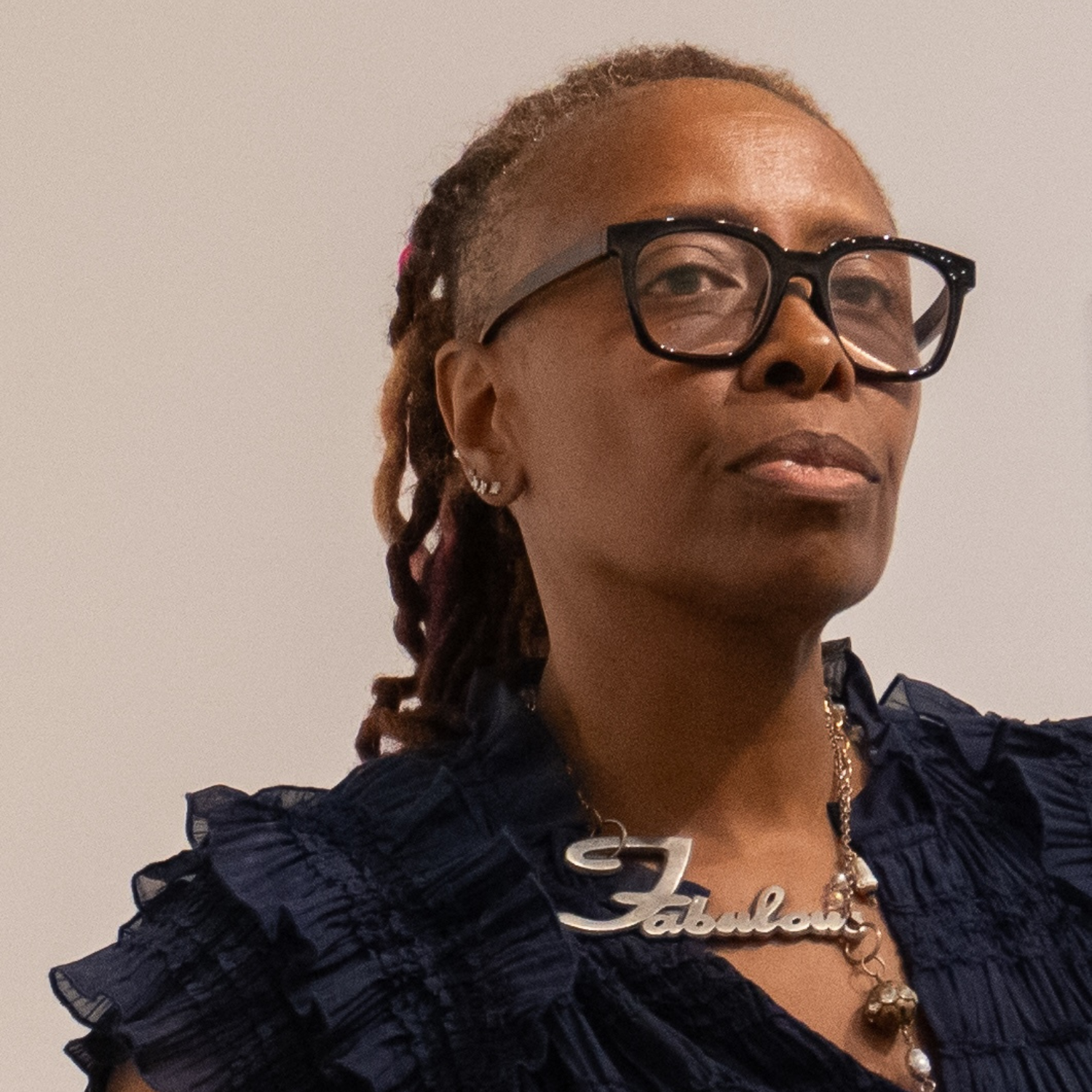
Join us for an evening with BLACKTIVISTS artist Veronica Jackson in conversation with Washington Post journalist Greg Schneider. Together, they'll explore the stories behind Jackson's powerful portrait series and the women whose advocacy helped shape our nation.
Tickets include wine, beer, and light bites. Free parking is available in the First Baptist parking lot next to the museum.
Doors open at 5:30pm.
__________________________________
Artist Statement
I create symbolic remembrance work that honors and illuminates Black women who mark, claim, and take up space. My multi-decade interpretive exhibit design and architecture careers form the foundation of my multidisciplinary visual art practice. I transform complex stories into accessible visual messages using text and familiar objects in unexpected ways. For example, black letters on black felt-lined bulletin boards illustrate my “languages of invisibility.” I also employ various design methodologies such as order, hierarchy, scale, form, and materiality to visually articulate Black women’s stories. My narrative artwork stems from a core internal inquiry: What does it mean to be invisible and how does that designation shape my identity and sense of self?
My background encompasses the critical examination of visual culture. As an architect and designer, I creatively solved problems related to the structural systems within virtual and built environments. As an artist, I record, interpret, and make aware the complexities in which humans exist and affect their social surroundings. My work lives at the intersection of visual art, architecture, and interpretive design, and combines past professional disciplines, present lived experiences, and contemporary and historic research.
My initial and ongoing project, The Burden of Invisibility, represents my evolution from designer to conceptual artist and my critical examination and rendering of the world around me. This body of work forms the foundation of my practice which investigates Black women’s (in)visibility and (de)valuation in visual culture, while responding to the realities of a gendered and racialized existence in America.


